Choice
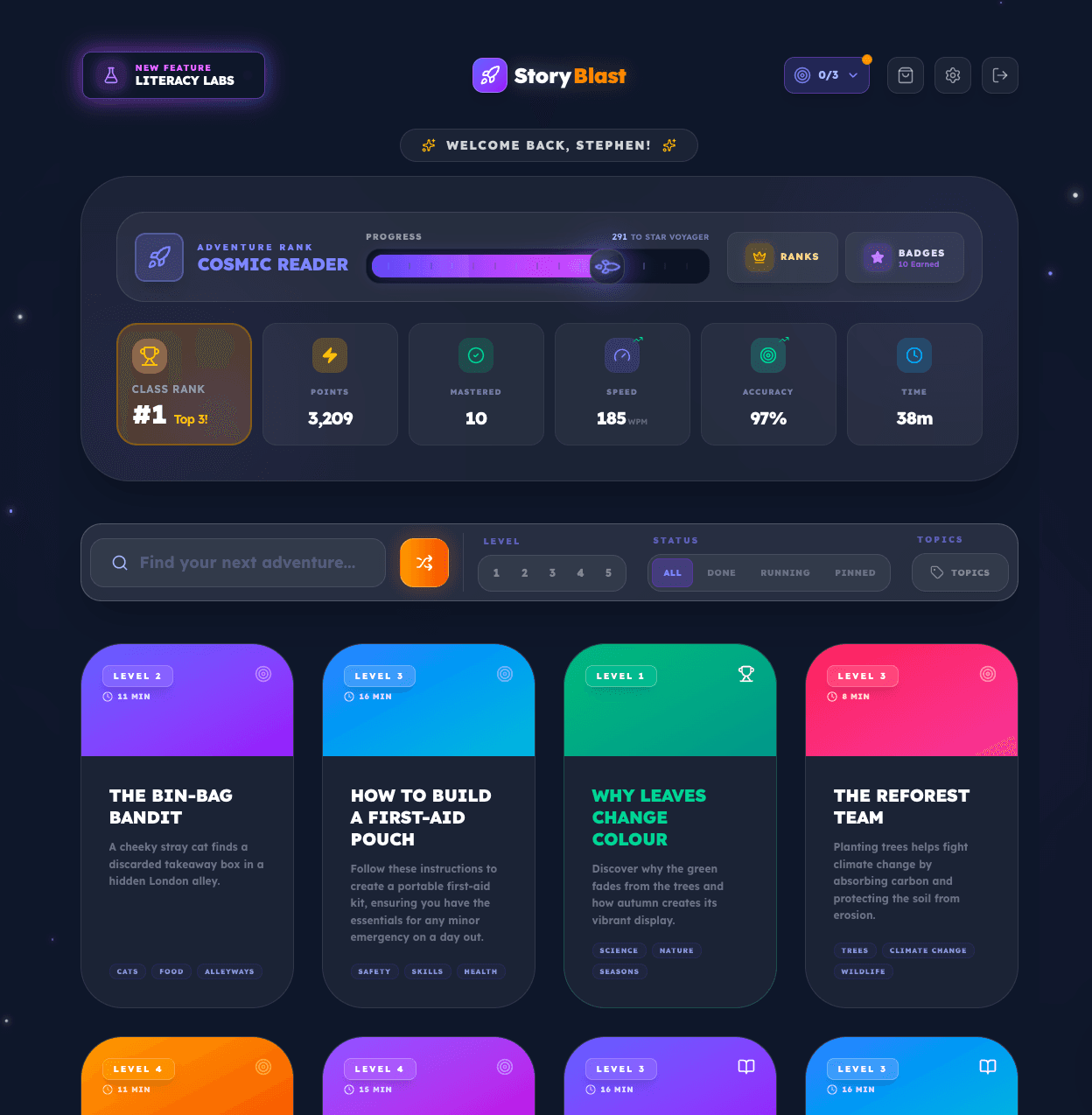
Pupils explore more than 1,600 stories and choose themes that interest them.
Many pupils do not reject reading completely. They reject texts that feel irrelevant, difficult, embarrassing or disconnected from the things they enjoy. StoryBlast gives them choice, age-respectful content and a game-like reason to keep going.
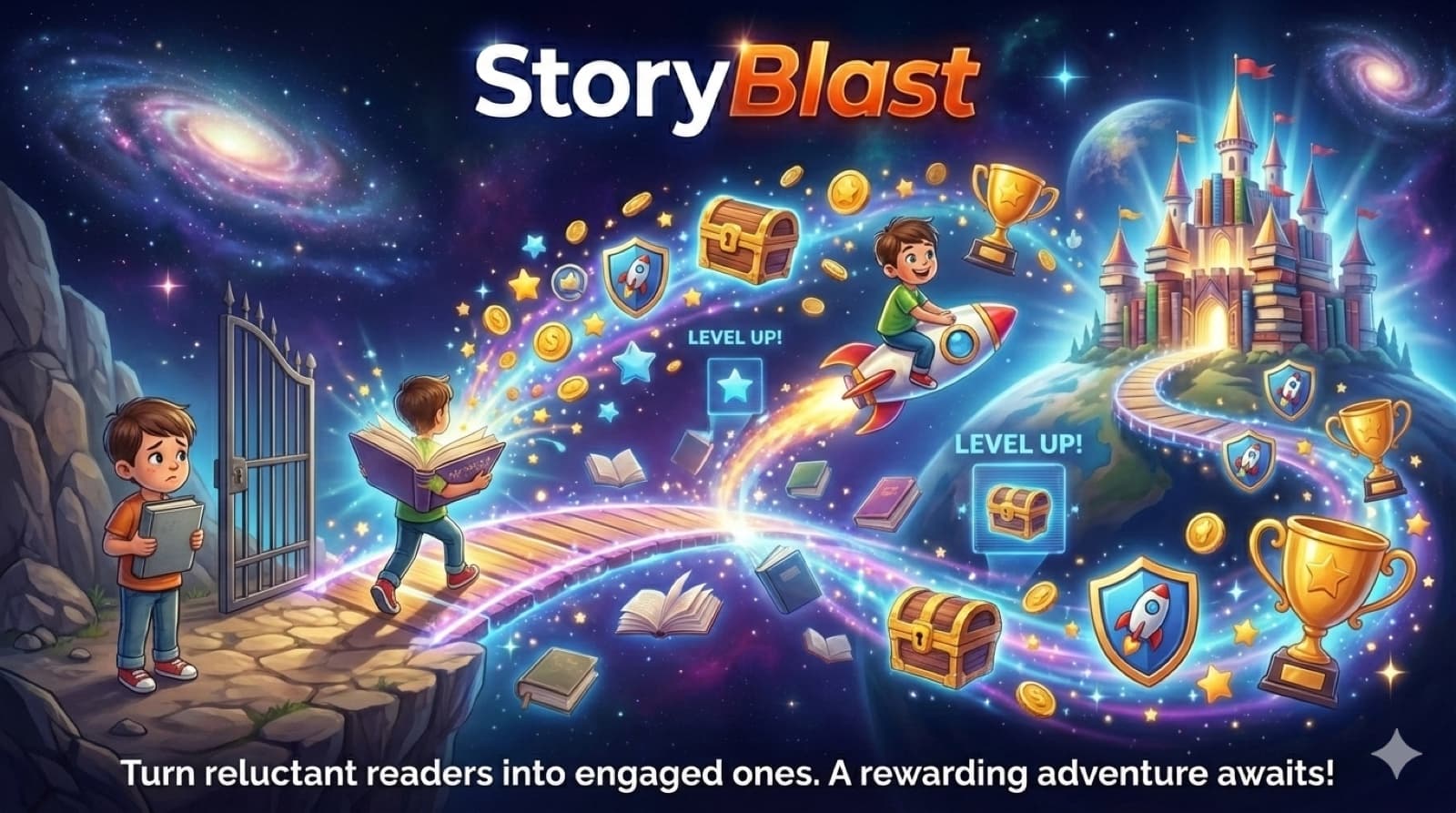
Pupils can disengage from reading for many reasons. Some have struggled for years. Some associate reading with correction or failure. Others have simply not found material that reflects their interests.
For older pupils, being given reading material that looks too young can make participation even harder. The first step is creating an experience that protects confidence and makes reading feel worth trying.
Pupils explore more than 1,600 stories and choose themes that interest them.
High-interest fiction and non-fiction help reading feel connected to the pupil’s world.
An age-respectful digital experience helps reduce the stigma that can surround reading support.
Points, badges and streaks make every completed story feel like progress.
Optional friendly competition gives pupils another reason to participate.
Short stories and connected missions create achievable reading experiences.
Feedback from teachers using StoryBlast repeatedly returns to engagement. These are recurring themes, not formal measured outcomes.
Older struggling readers still need accessible texts, but they also need themes, visuals and language that respect their age. StoryBlast includes high-interest material across sport, science, history, adventure and mystery that can appeal beyond the traditional reading-scheme experience.
Choose the class or pupils who will benefit from regular supported reading.
Give pupils freedom to choose themes rather than assigning every first story.
Build a consistent routine around short, successful experiences.
Recognise taking part, finishing stories and returning—not only the highest score.
StoryBlast provides engaging reading and literacy practice. Schools should continue to use specialist assessment and professional support where pupils require it.
No. StoryBlast is designed for all pupils. Its themes, reading controls and game-inspired progression can support many interests and reading needs.
Yes. StoryBlast includes age-respectful content intended to avoid the childish presentation that can discourage older struggling readers.
No. Schools can decide how prominently they use competitive elements. Progress, streaks and personal achievement can be emphasised instead.
No. StoryBlast provides engaging reading and literacy practice. It complements, rather than replaces, specialist assessment and targeted professional support.
Give reluctant readers stories they can choose and missions they want to complete.